Changes After Construction
It was converted into a mosque by having its minbar placed by Babüssaade (The Door of Felicity) Agha, Boşnak (Bosniak) Ahmed Agha.
It was destroyed by fire in 1915.
It was rebuilt by the Hırka-i Şerif Veysel Karani Foundation between 1994 and 1996.
Featured Highlights
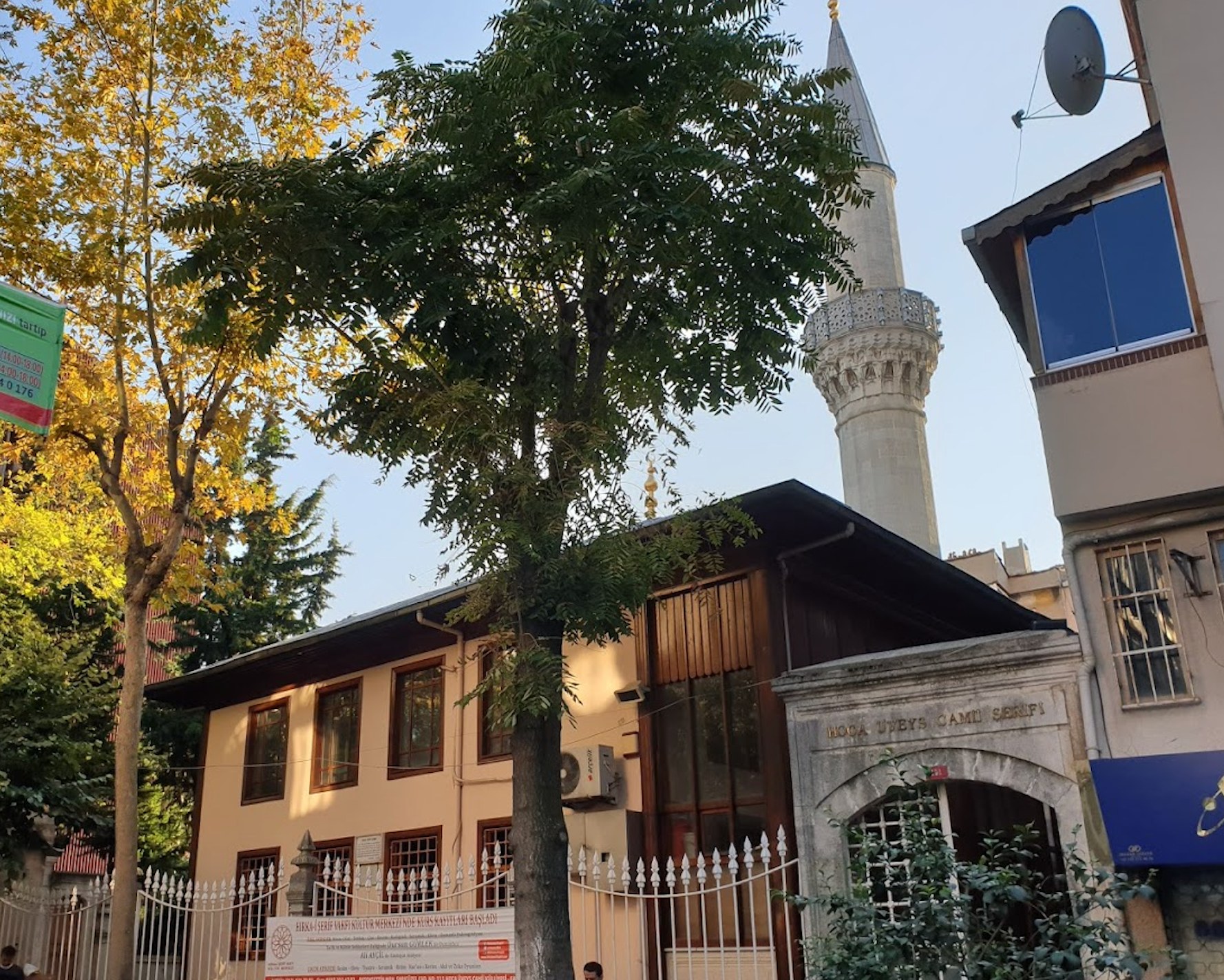
The building, which was re-arranged by the Hırka-i Şerif Foundation in 1996 with wide eaves, a lead roof and a square plan, was opened for worship with its interior walls covered up to half of the congregation area, its mihrab completely decorated with Kütahya tiles and bearing the inscription Ayat al-Kursi (Verse of the Throne of the Holy Quran), and its ceiling covered with wooden bars in a square shape.
The minbar and the preacher’s pulpit are made of wood. The mosque, which has a small narthex, has 11 rectangular windows at the bottom and 12 windows at the top. The mosque has muezzin’s gallery with wooden railings on the right and left of the entrance door, and a wooden upper gallery has been built over the narthex.
The lead-topped minaret made of cut stone with a single balcony on the right can be accessed from outside and inside the mosque.
In the graveyard next to the mosque is the domed tomb of Osman Agha, the Çeşnigar* of Suleiman the Magnificent, and in this tomb he, his wife and daughter are buried.