
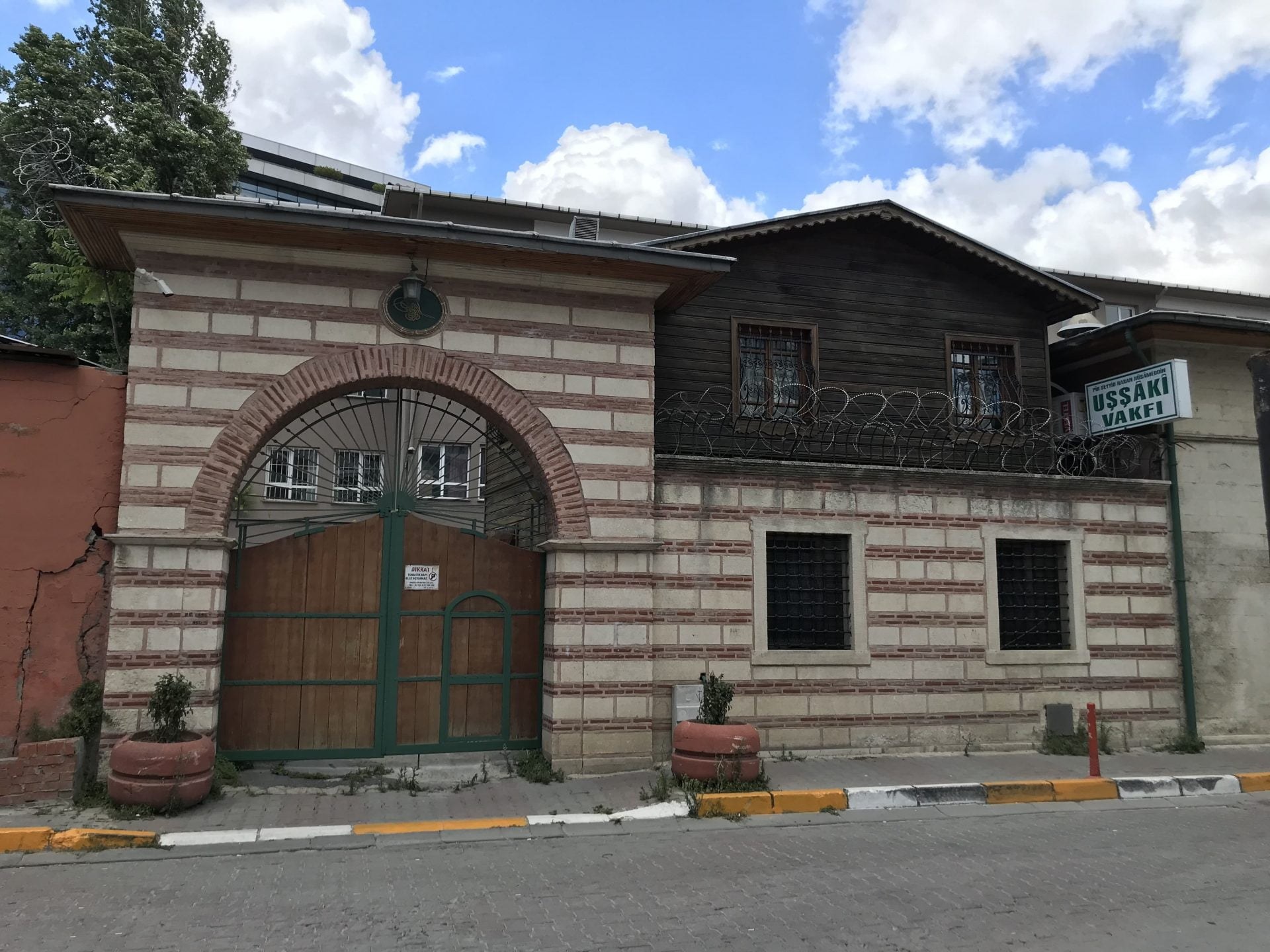
Changes After Construction
The Sufi Lodge was founded by Hasan Hüsâmeddin Uşşâkî in the last quarter of the 16th century; Murad III supported its establishment.
In the foundation period, the house in Kasımpaşa was used with the function of a Sufi Lodge; after the death of the founder, his son Sheikh Mustafa Efendi expanded the scope of the waqf.
In the mid-18th century, during the sheikhdom of Ahmed Hüsâmî Efendi, the ruined house-Sufi Lodge was demolished and rebuilt.
In Hijri 1266 (1850), the Sufi Lodge was revived anew; in Hijri 1310 (1892-1893), it was renewed and survived in this form until 1925.
In 1925, the Sufi Lodge function came to an end; in 1927, it was adapted for use as a girls’ school and the tawhidkhana was converted into a dining hall.
In 1960, the semahana and the harem and selamlık sections were demolished; a primary school was built on the site of the Sufi Lodge.
In 1982, the tomb section and the main gate were repaired and have survived to the present day.
Featured Highlights
The Sufi Lodge was also known as Uşşâkî Âsitânesi, Perşembe Sufi Lodge, and Şimşirli Sufi Lodge.
As the âsitâne and “pir house” of the Khalwatiyya-Ushshaqiyya order, it became one of the central structures in Istanbul’s network of Sufi lodges.
The rituals were performed on Thursdays; the Sufi Lodge functioned as a strong center in terms of Sufi music.
Before 1925, the final architectural program consisted of the tawhidkhana, two tombs, a graveyard, selamlık and harem sections, a kitchen, and a shadirvan.
What has essentially survived to the present day is the tomb section and the main gate; a primary school currently stands on the site of the Sufi Lodge.