
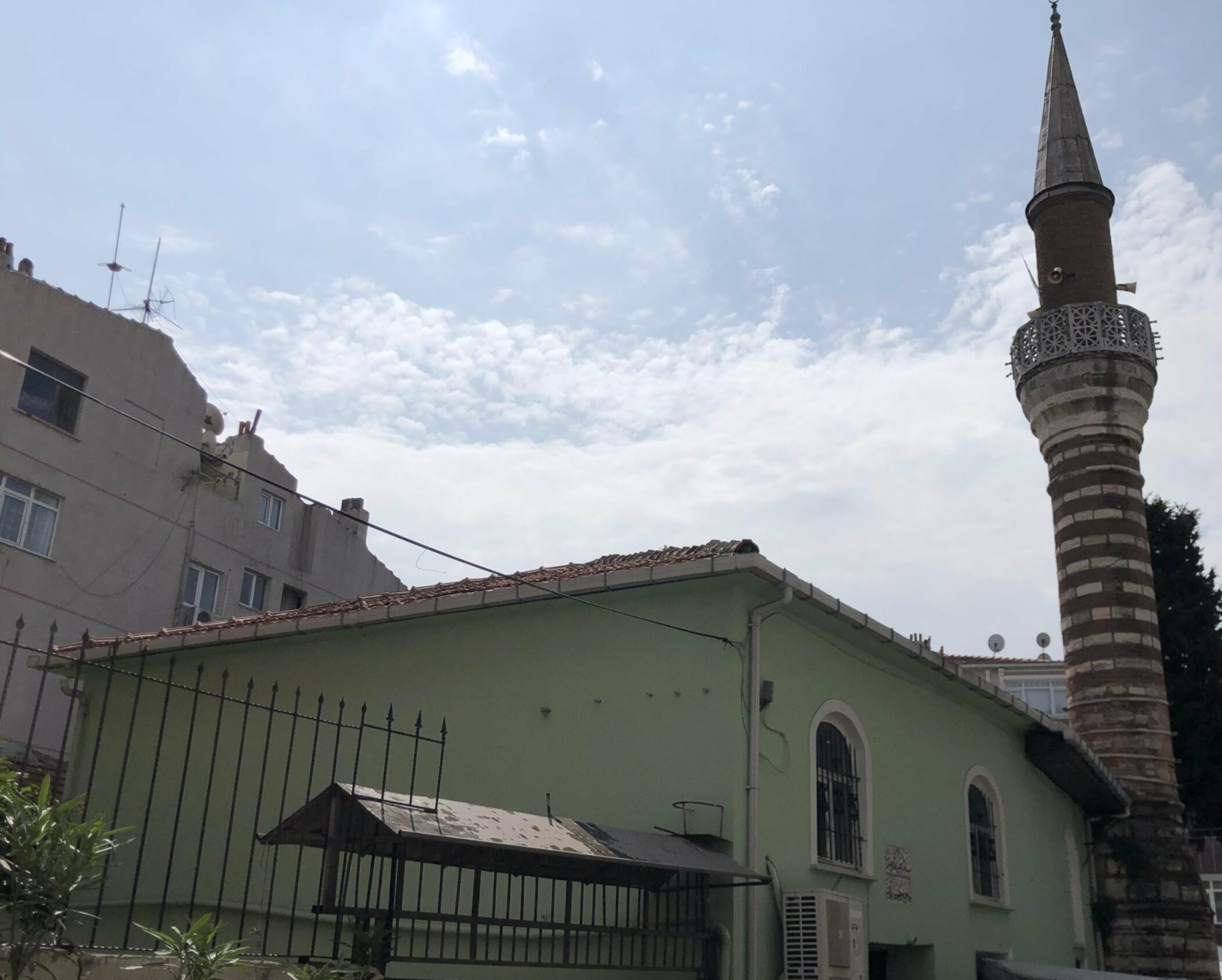
Changes After Construction
During the zoning plannings, a road was built through the mosque; its minaret and arched courtyard entrance were removed in the process.
The mosque, which remained in ruins for years, was restored and opened for worship by the local people between 1955 and 1957.
Featured Highlights
Its minbar was placed by Kalaycızade Mehmed Efendi.
The roof was constructed of wood and the walls were constructed of masonry.
Its mihrab is made of tiles, its minbar and pulpit are made of wood.
The single-balcony, brick and stone minaret is located on the right side of the mosque.
The nearby “Ağaçkakan Tekke” was known as the “Devi Tekke”, but it was completely destroyed.
Additionally, there are the ruins of the Sıbyan Mektebi (Ottoman-era primary school) 200 meters west of the mosque.
A shanty house was built over the well; there are two lodging houses.
The tombstone of the benefactor, Debbağ İskender Çelebi, who is buried in front of his minbar, is inscribed with the Latin alphabet.