
Changes After Construction
Historical records indicate that the grounds of this complex originally accommodated the private residence of Kemankeş Kara Mustafa Pasha, who served as Grand Vizier between 1638 and 1644.
Following the execution of Kemankeş Kara Mustafa Pasha in 1644, the palace was designated as the official seat of the Grand Vizier (Sadaret), hosting numerous successive viziers.
The structure was entirely destroyed by the Great Fire of Istanbul on September 17, 1755.
Recommissioned in 1756 by order of Sultan Osman III, the reconstructed complex began serving as the Ottoman Empire's first civic bureaucracy hub and administrative government hall in the modern sense.
The complex was leveled during the Alemdar Mustafa Pasha uprising of 1808.
Rebuilt in 1809 under Sultan Mahmud II, the building was once again completely consumed by fire in 1839.
Prompting an end to the tradition of timber construction in Ottoman civic architecture, the complex was rebuilt in 1844 utilizing load-bearing masonry (brick and stone).
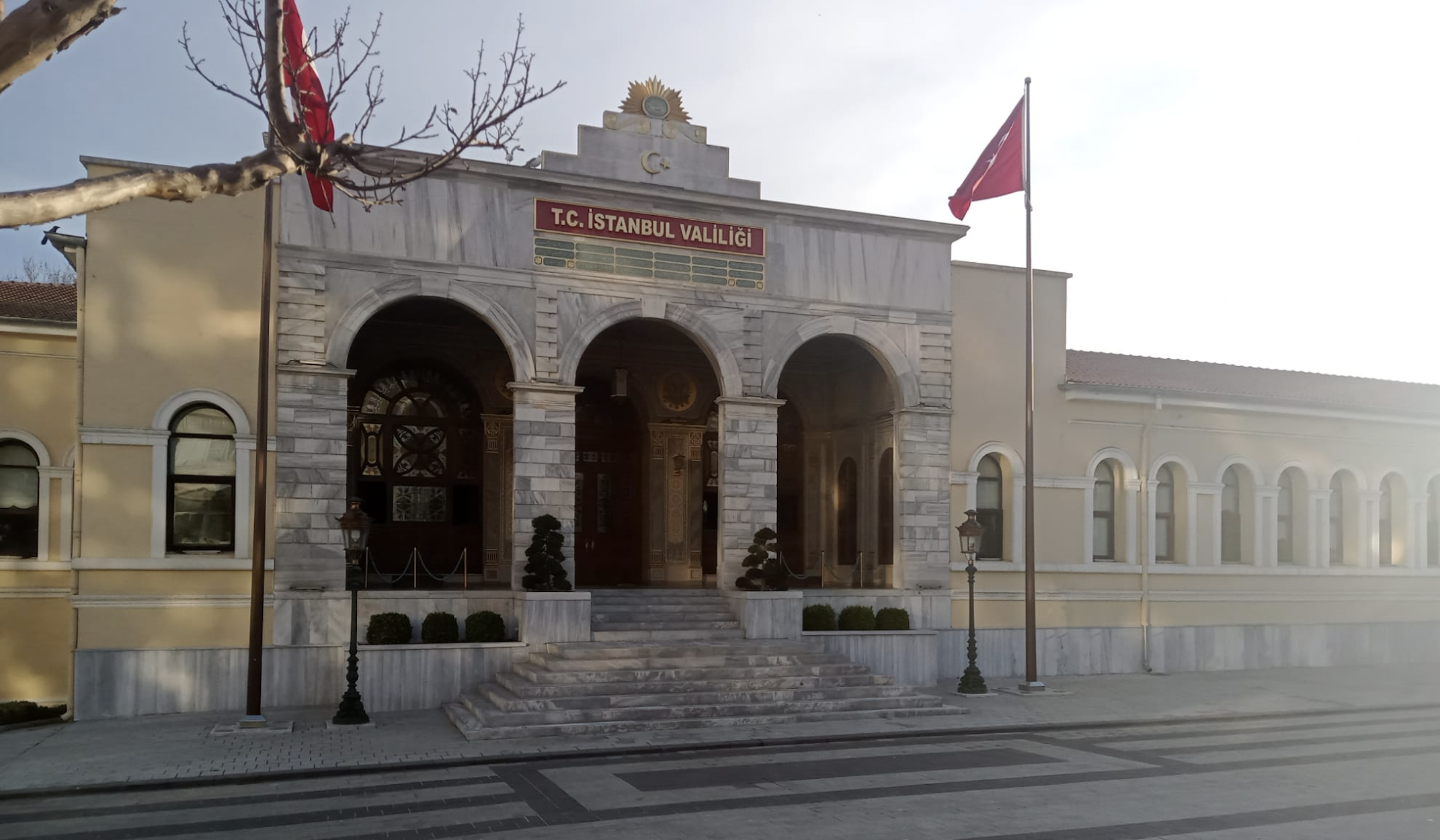
Following a catastrophic fire in 1911, the central block of the original three-wing monumental layout was destroyed, yielding the architectural configuration seen today.
Comprehensive conservation and restoration programs were carried out across both the facades and interior spaces in 1980, 1997, and 2026.
Featured Highlights
Currently known as the Istanbul Governor's Hall (Vilayet Konağı), the site was historically referred to as the Pasha Palace, Pasha Gate, or Bab-ı Asafî until the late 18th century, and from the reign of Sultan Abdülhamid I onward, as the Bab-ı Ali (Bab meaning gate, and Ali meaning high or sublime—translating to the Sublime Porte).
The complex holds major architectural significance as the first monumental masonry building designed by Master Architect Stefan Kalfa, a prominent figure of the Tanzimat Era renowned for his restrained, horizontally oriented Empire (Ampir) style.
It stands as the first monumental civic administration building in the Ottoman Empire designed intentionally detached from the imperial palace to house civil governance alone.
Out of deference to the Sultan, the complex’s monumental gate was deliberately built lower in elevation than the nearby Imperial Procession Kiosk (Alay Köşkü); its ornamental inscriptions were executed by the master calligrapher Yesarizade Mustafa İzzet Efendi.
Located within the complex grounds, the Imperial Records Depository (Hazine-i Evrak), designed by Swiss architect Gaspare Fossati, is recognized internationally as one of the earliest purpose-built, damp-proof modular archival repositories in architectural history.
The pivotal administrative, legislative, and ministerial reforms (nezaretler) that marked the Ottoman modernization and westernization eras were conceived within the council chambers of this hall.
The site witnessed the Raid on the Sublime Porte (Bab-ı Ali Baskını) in 1913—recognized as the first modern military coup d'état in Turkish history—during which War Minister Nazım Pasha was assassinated and Grand Vizier Kamil Pasha was forced to resign at gunpoint.
Since October 29, 1923, the former Grand Vizierate has officially operated as the Vilayet Konağı (Governorate Headquarters), continuing its legacy as the supreme seat of civil administration and state representation in Istanbul.