
Changes After Construction
The tekke was founded by Sheikh Hâfız Mehmed Aziz Efendi as a branch of the Raûfî Âsitâne in Üsküdar.
Hâfız Mehmed Efendi drew up his endowment deed in 1761 and endowed his house in Karacaburun as a Halvetî tekke.
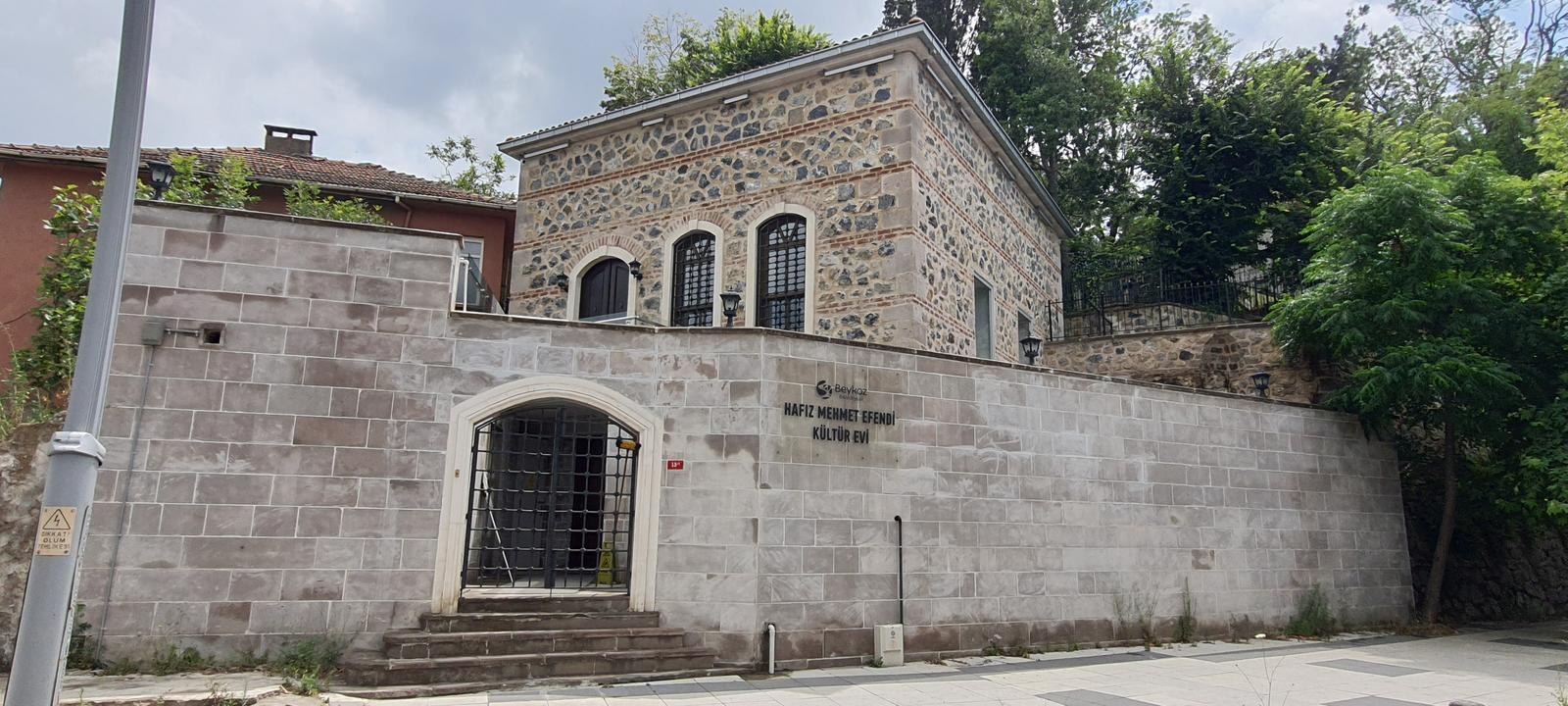
The tekke, which had fallen into ruin over time, was later rebuilt; the date and patron of this reconstruction have not been identified.
In 1932, the tekke was demolished due to road widening, while its cemetery has survived to the present day.
The harem section belonging to the tekke was sold in the 1930s; the wooden structure in this section was dismantled, and its ground floor was used for a time as a shop.
The tekke plot was leased to Beykoz Municipality by the General Directorate of Foundations in 2012 and was restored in 2021. Today, it is used for educational purposes by a civil society organization.
Featured Highlights
The structure is also mentioned in sources under the names Hâfız Mehmed Efendi Tekke, Beykoz Raûfî Tekke, and Sheikh Hâfız Efendi Tekke.
The tekke’s Sufi affiliation was with the Raûfî branch within the Ramazâniyye branch of the Halvetî order; this identity places the tekke within the network of Halvetî lodges along the Bosphorus line.
In the cemetery of the tekke is the grave of Hâfız Mehmed Efendi, one of its sheikhs, who died in 1794; his gravestone inscription and the record of a Halvetî crown are preserved.
Koca Mehmed Ragıp Pasha, who served as grand vizier for six uninterrupted years during the reigns of Sultan Osman III and Sultan Mustafa III, personally provided financial support during the foundation process of the tekke.