
Changes After Construction
The mosque, which suffered from fires twice, was repaired in later years.
During the repair in 1721, a stone fountain in classical architecture was built next to the courtyard gate.
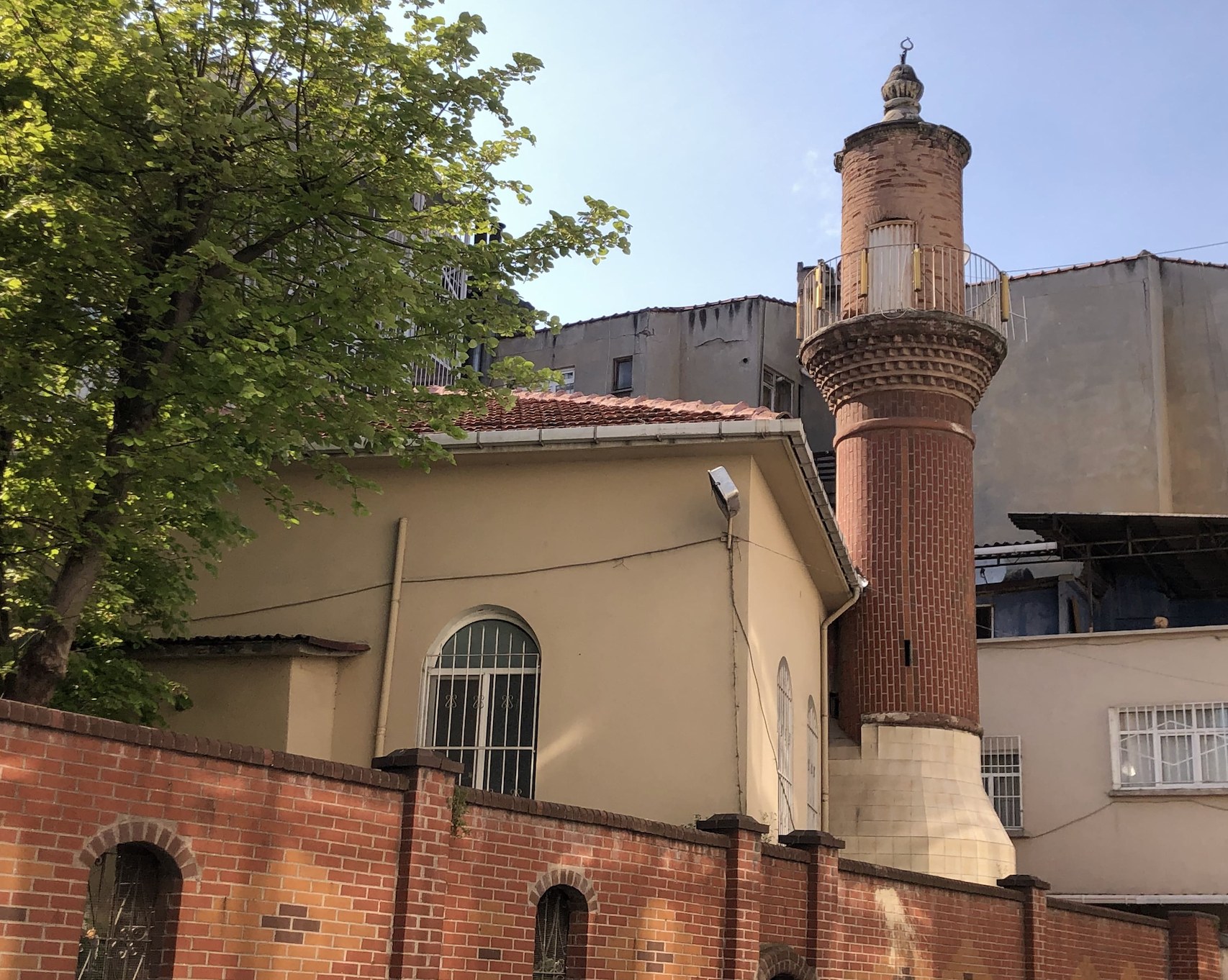
The masjid, which fell into disrepair again over time, was rebuilt with brick walls, a reinforced concrete ceiling and a roof by the public in 1977 and opened for worship.
Miralay Mazlum Bey, who resided in Aksaray, established the Mülhak Nukud Foundation in 1883 in order to cover the expenses of the mosque.
Within the scope of restoration work by Fatih Municipality in 2025, the gravestones were cleaned with appropriate mechanical and chemical methods and landscaping was carried out.
Featured Highlights
Also known as “Sinekli Masjid” and “Aksaray Mosque”.
In its new state, it is a reinforced concrete structure with brick walls. When entering the harim, an additional section extends along the wall of the entrance door in an “L” shape on the right, expanding the mosque area; there is no narthex.
The women’s gallery, which is made of reinforced concrete, has iron railings and is on two pillars in the harim.
The ceiling of the harim, whose entrance door is on the left, is flat reinforced concrete and painted with lime; the projecting mihrab is covered with marble, while the minbar and the pulpit are wooden.
The walls are covered with marble up to half a meter from the ground. There are two long windows on the left and mihrab walls, while the windows on the right wall have been moved up and made smaller.
The roof of the mosque is covered with tiles. The minaret, which is made of bricks, is located on the left of the mosque and the balcony railing is made of iron; the entrance of the minaret opens to the upper gallery.
In the courtyard, there is the mosque’s graveyard and a fountain dating back to 1720.