
Changes After Construction
The complex is part of the group of structures built in 988/1580–81; it has been stated that the madrasa may have been designed by Mimar Sinan and completed after his death in 1588.
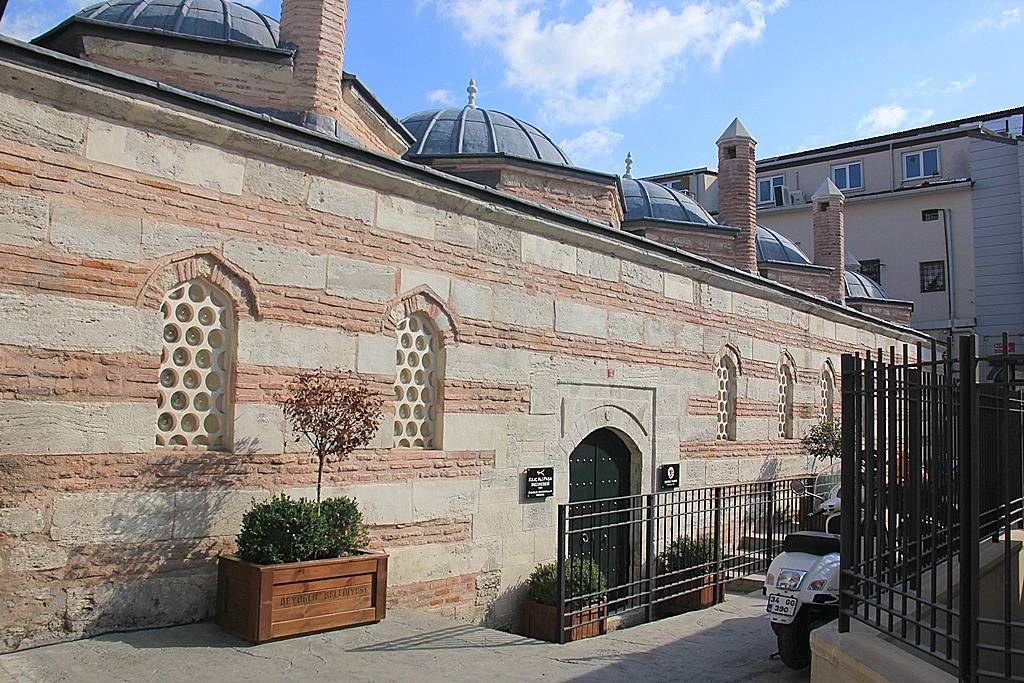
Because of the structures built in the 19th century, the madrasa and bath units were enclosed from the surrounding area; with the raising of the ground level in front of the entrance, the level of the madrasa remained lower.
A repair/expenditure process concerning the madrasa has been identified through the imperial decree dated 28 September 1903 and the document dated 4 October 1903.
The madrasa was transferred to the Child Protection Agency for many years and used as a dispensary, and the structure underwent substantial alteration during this period.
The library collection attached to the madrasa was transferred to the Süleymaniye Library in 1918.
It has been recorded that the structure was vacated around 1995 and that the interventions inside it were largely left in place.
Featured Highlights
The structure has a square plan; it consists of domed cells around a porticoed courtyard, and it has a large domed classroom-masjid unit projecting toward the graveyard.
The madrasa has an arrangement of seventeen cells around a porticoed courtyard, covered by eighteen domes.
The madrasa was built with a mixed technique of stone masonry and brick bonding beams.
The library established within the madrasa in 1216/1801 was operated under a waqf system, and a significant part of its collection consisted of works on the science of tafsir.
The library collection was transferred to the Sultan Selim Library in 1914, then to the Süleymaniye Library in 1918, and is preserved there today.