
Listen-0:00
Changes After Construction
Its minbar was added by Esedullah Ağa, who served as Kapıcıbaşı (the chief doorkeeper) in the palace, and his wife Ayni Hatun.
It underwent extensive repairs in 1889.
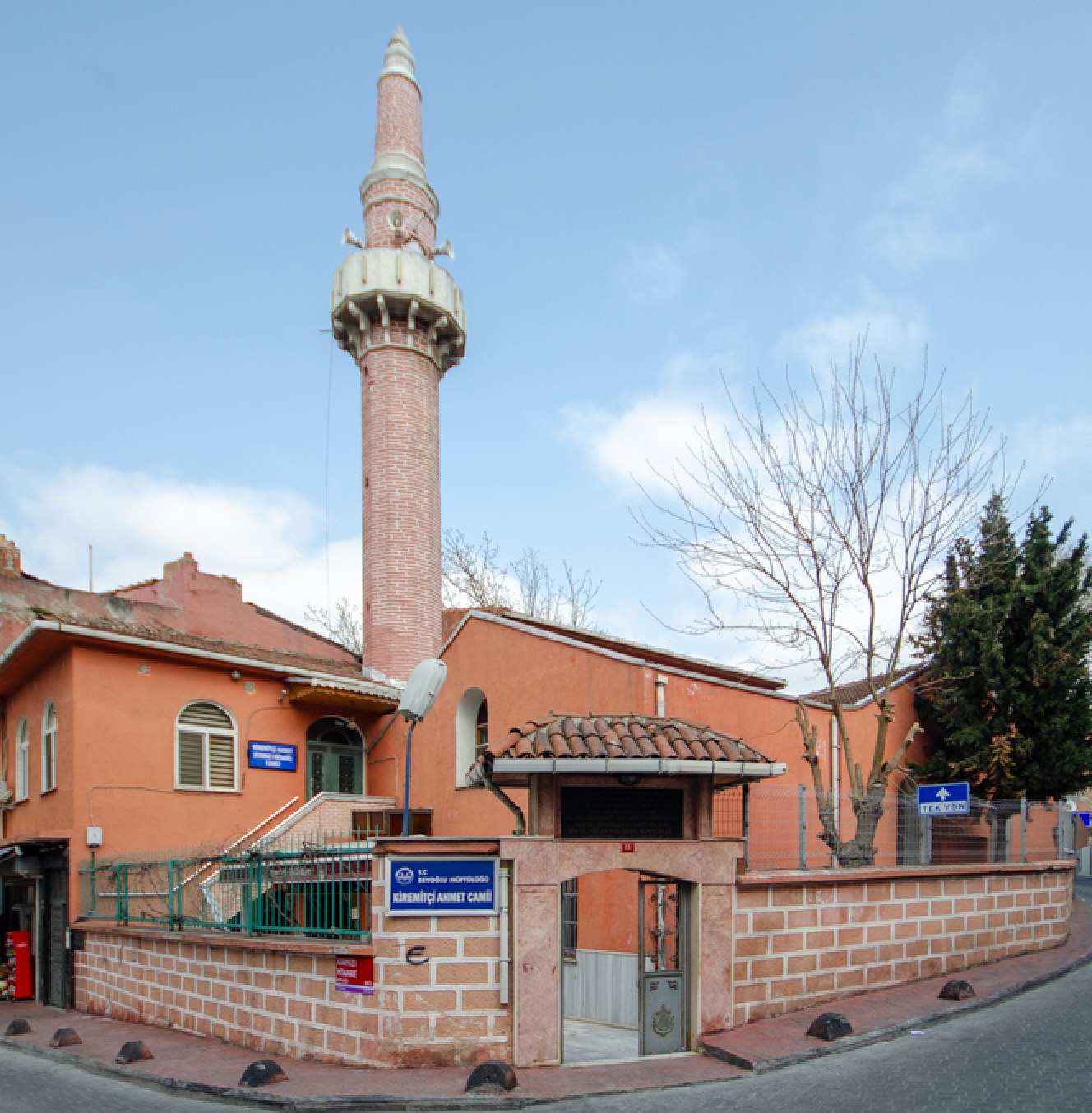
It was restored by the Directorate Regional of Foundations in 1994.
Featured Highlights
It was built on a 200 m² land.
Its walls are made of stone, and the muezzin's gallery and minbar are made of wood.
It has a single-balcony minaret made of red brick, which is why it is known among the public as the "Kırmızı Minare (Red Minaret) Mosque".
Its founder, Ahmet Ağa, is buried in a surrounded grave next to the mosque.