
Changes After Construction
In the early 7th century, Princess Sopatra and Eustolia founded a convent here; the structure disappeared during the period of the Latin Empire.
After the city returned to Byzantine rule in 1261, Isaakios Doukas commissioned a single-storey monastery on the same site; in 1281, Maria Despina Palaiologina rebuilt the monastery and church in the form that survives today.
Because of the clashes that took place around it in 1453, the building came to be known as the “Bloody Church”; the road leading up to the church became associated with the name “Sancaktar slope.”
Through decrees issued in the reigns of Mehmed II and Bayezid II, the church was confirmed as belonging to the Greek community and its property status was reaffirmed; attempts to convert it into a mosque during the reigns of Selim I and Ahmed II did not succeed.
It was damaged in the fires of Fener (1633, 1640, 1729); repairs and additions significantly altered its original appearance.
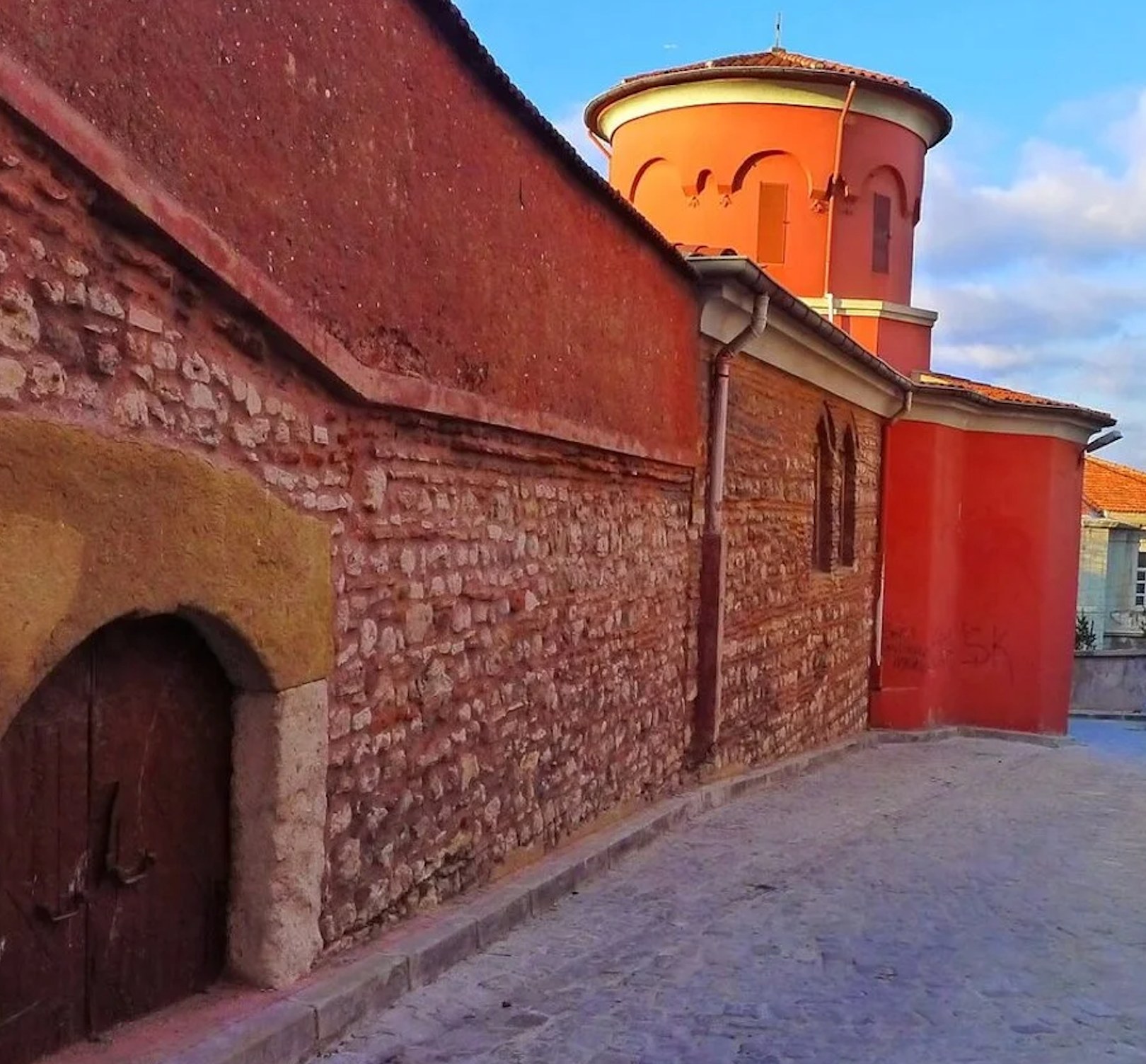
At the end of the 19th century, a small school was built near the church; in 1892, a small bell tower was added.
It was damaged during the events of September 6–7, 1955, and was repaired afterward.
Featured Highlights
The church belongs to the Greek Orthodox Patriarchate of Istanbul.
The building is also known as the “Church of Saint Mary of the Mongols” and “Panagia Mouchliotissa”; its dedication is recorded as “Theotokos Panagiotissa.”
It is described as the only example in Istanbul surviving from the Byzantine period that continued uninterrupted in its function as a church during the Ottoman period without being converted into a mosque.
The building is evaluated as a unique/exceptional example within Byzantine architecture of Constantinople with its original centrally domed tetraconch plan scheme.
The church stands within a courtyard behind high walls; since the entrances are often kept closed, visitor access may be limited.
In the interior, an 11th-century mosaic icon and icons dated to the 13th–14th centuries stand out, as do decorative elements such as the depiction of the “Last Judgment” on the east wall.
According to legend, the underground passage beneath the church extends to Hagia Sophia.