
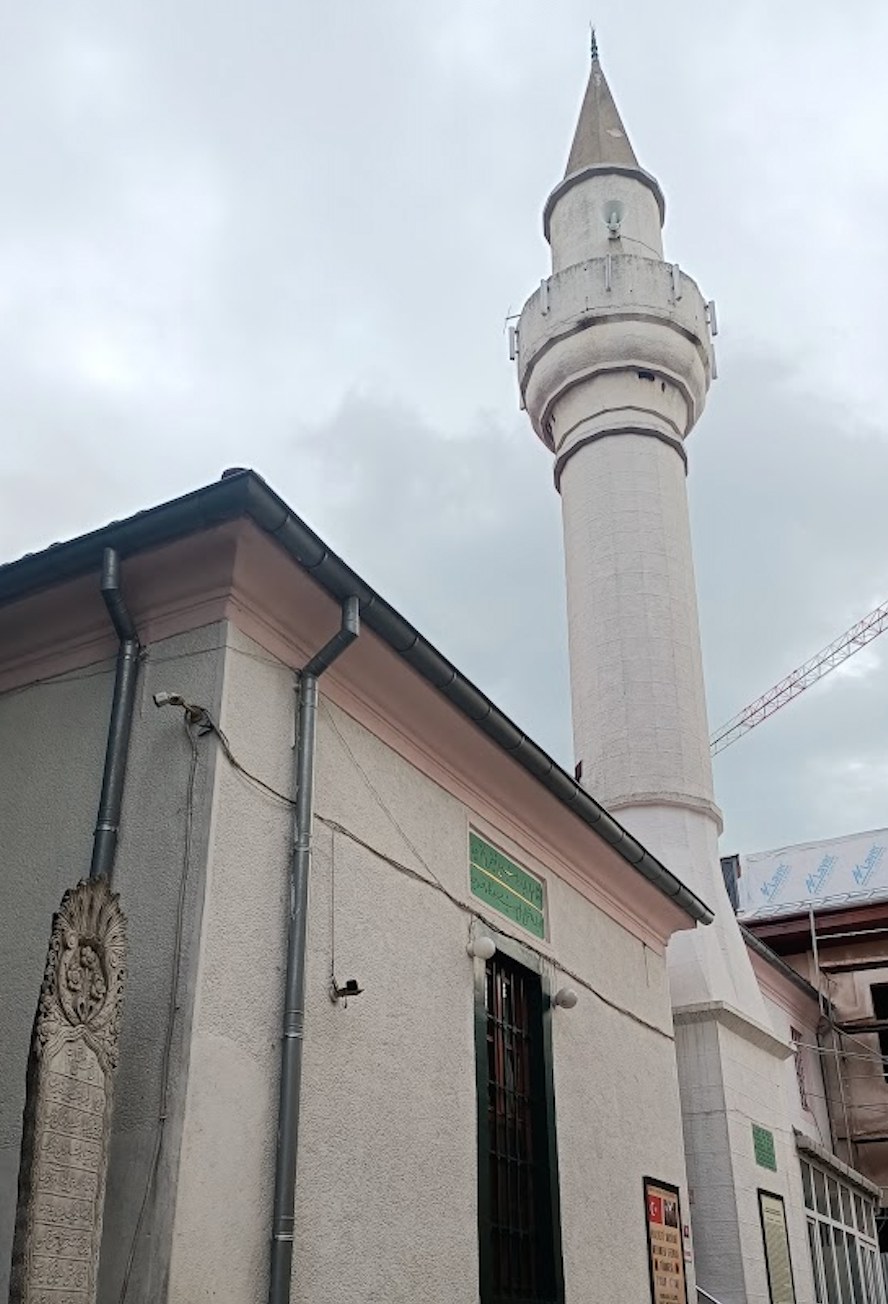
Changes After Construction
Construction of the building began in 1684 as a tekke by Grand Vizier Damat Hasan Pasha, who served during the reign of Sultan Ahmed III, and was completed in 1688 by Sheikh Nasuhi Mehmed Efendi.
The structure suffered severe damage in a fire during the reign of Sultan Abdülaziz and was rebuilt in masonry in 1863.
After 1925, the building was used entirely as a mosque, while its other sections were used as residences by members of the family descended from Sheikh Nasuhi Efendi.
In 1966, seismic strengthening works were carried out by Alaeddin Nasuhioğlu, a member of the family, giving the building its present form.
Featured Highlights
The tomb of Sheikh Mehmed Nasuhi Efendi, the chief deputy of Karabaş Veli, founder of the Karabaşiyye branch of the Halvetiyye-Şabaniyye order, is located within the complex.
It is also known as the Nasuhi Tekke and the Nasuhi Mehmed Efendi Tekke Mosque.
The complex also includes a cemetery containing family graves and a fountain built in 1705 by Grand Vizier Damat Hasan Pasha.
The ceiling and pulpit of the mosque are wooden, while its mihrab is set into the wall in the form of a niche.
Grand Vizier Hasan Pasha, who held Sheikh Nasuhi Mehmed Efendi in great esteem, was a statesman known by the title “Damat” because he was married to Hatice Sultan, daughter of Sultan Mehmed IV.