
Changes After Construction
In 1766, during the reign of Sultan Mustafa III, the first major repair of the mosque was carried out by Mehmed Pasha's grandson, Şükrullah Effendi.
Later, in 1835, during the reign of Sultan Mahmud II, a second repair was carried out by the Minister of Foundations Mekkizade Mustafa Asım Effendi.
In 1958, another restoration was carried out by the Foundations.
Finally, a comprehensive restoration was carried out in 2007-2008 and the mosque was reopened for worship in 2008.
Featured Highlights
It is also known as Nişancı Mosque, Mehmed Pasha Mosque, Nişancı Pasha Mosque and Boyalı Mehmed Pasha Mosque.
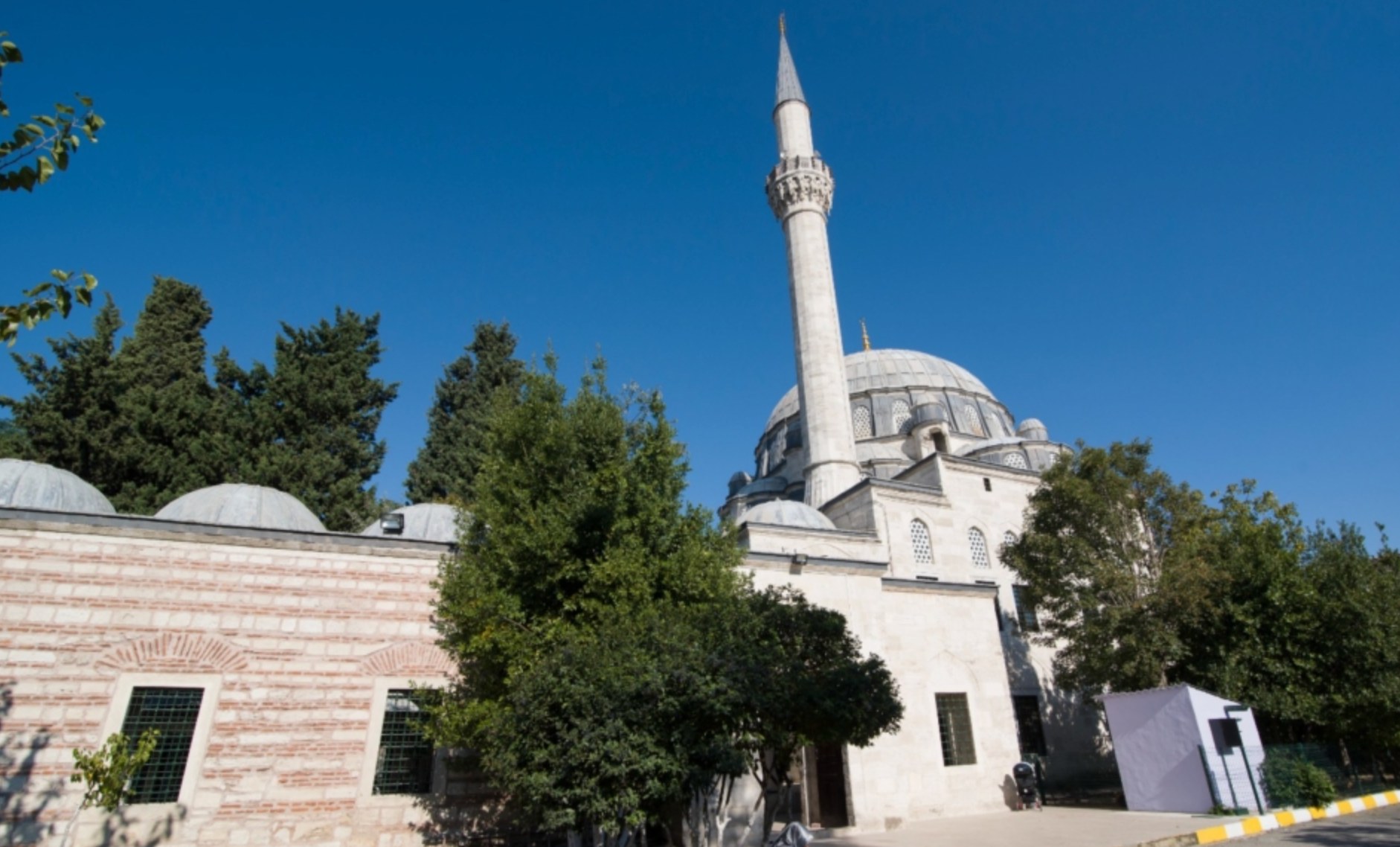
Classical Ottoman architecture; a different application of the octagonal scheme developed by Sinan. The main dome, supported by four large and four small half domes, sits on eight pillars. There is a half dome on each of the mihrab and the projections on both sides.
The mosque is illuminated abundantly by three rows of windows. The interior is decorated with hand-drawn palmette and rumi motifs and inscriptions. On either side of the mihrab are sermon platforms made of porphyry marble. The elegant minbar has a geometric patterned grid and its cone is decorated with gold stars.
The five-bay narthex is covered with cross vaults and domes. There is a fountain with eight columns and a cone in the courtyard. The walls of the mosque around the courtyard are made of alternating stone and brick.
The single-balcony minaret in the northwest has stalactites and is one of the fine examples of classical Ottoman art.
The complex has two madrasahs and a lodge; however, these structures have not survived to the present day. In the work Hadîkatü'l-Cevâmi (with the appendices of Süleyman Besim Efendi and Ali Sathi Bey), it is stated that the madrasah and the lodge were repaired in 1835.
The shrine of Mehmed Pasha, the founder of the complex, has an octagonal plan and a dome; it is made of marble and is quite plain. In front of the shrine is a summer fountain with three windows.