
Changes After Construction
In 1766-67 (Hijri 1180), the lodge was rebuilt by Grand Vizier Muhsinzade Mehmed Pasha while preserving its former layout.
The lodge, which was destroyed in the Balat fire of 1782, was rebuilt by Galata Voyvoda Seyyid Halil Efendi; the renewal was completed in 1786 (Hijri 1200).
Mahmud II had the lodge rebuilt on a broader scale in 1818-19 (Hijri 1234); he had it rebuilt for a second time in 1835-36, and the plot was expanded eastward, where a harem section was added.
In 1844, Sultan Abdülmecid had repairs carried out and commissioned a fountain; in 1857-58 (Hijri 1274), the tevhidhane-tomb and the women’s gallery were partially renewed, while the dervish cells were demolished and rebuilt.
During the reign of Abdülhamid II, the lodge underwent repair again in 1882-83 (Hijri 1300); in 1893, the roof of the tevhidhane-tomb was overhauled, its paint was renewed, and the harem section was given its present form.
In 1909, certain repairs were carried out in the tevhidhane-tomb.
After the closure of the dervish lodges in 1925, the tevhidhane-tomb remained unused for a time; in 1945, the walls were rebuilt in masonry, some window arches were converted into pointed arches, and the roof was rebuilt.
Featured Highlights
It is the asitane and pir seat of the Jerrahi branch of the Khalwati order.
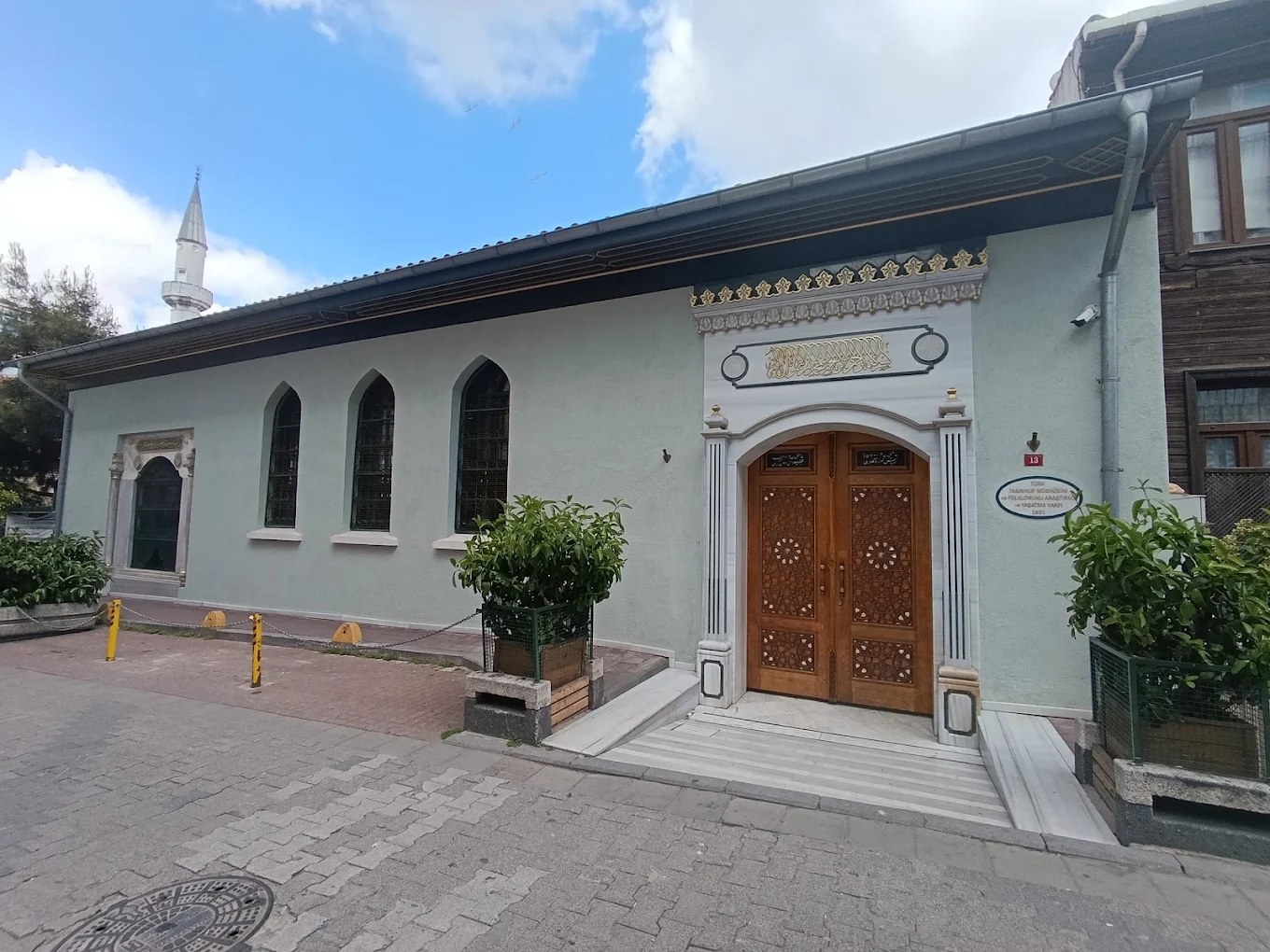
The tevhidhane and the tomb are gathered within the same mass under a single roof.
In the tomb are many wooden sarcophagi, foremost among them the sarcophagus of the pir Nureddin Jerrahi.
On the street façade of the tomb is the “niyaz window”; in the cartouche above it are the name of Nureddin Jerrahi and an inscription dated 1797.
Within the complex, the tevhidhane-tomb and the harem form the main mass; behind them, the arrangement of the sherbethane and the fountain courtyard can be traced.