Changes After Construction
The school history of the complex is associated with older educational buildings around Surp Garabet Armenian Church; it is stated that a school building was constructed on the eastern side during the rebuilding of the church in 1727.
The building known as Cemaran School was opened on 9 December 1838 in Yenimahalle, Üsküdar, on the site where today’s Semerciyan-Cemaran school stands; the institution was Istanbul’s first Armenian high and boarding school.
Cemaran School closed in 1841; the building was used for a period as a military hospital, was returned to the Armenian community in 1845, and the school reopened in 1846.
The school was moved to Yedikule Armenian Hospital in 1850; the building in Üsküdar was again used as a military hospital during the Crimean War of 1854-1855, and afterwards served as an official idadi school until 1859.
The three-storey wooden Cemaran building in Yenimahalle was completely destroyed in the fire of 2 August 1887.
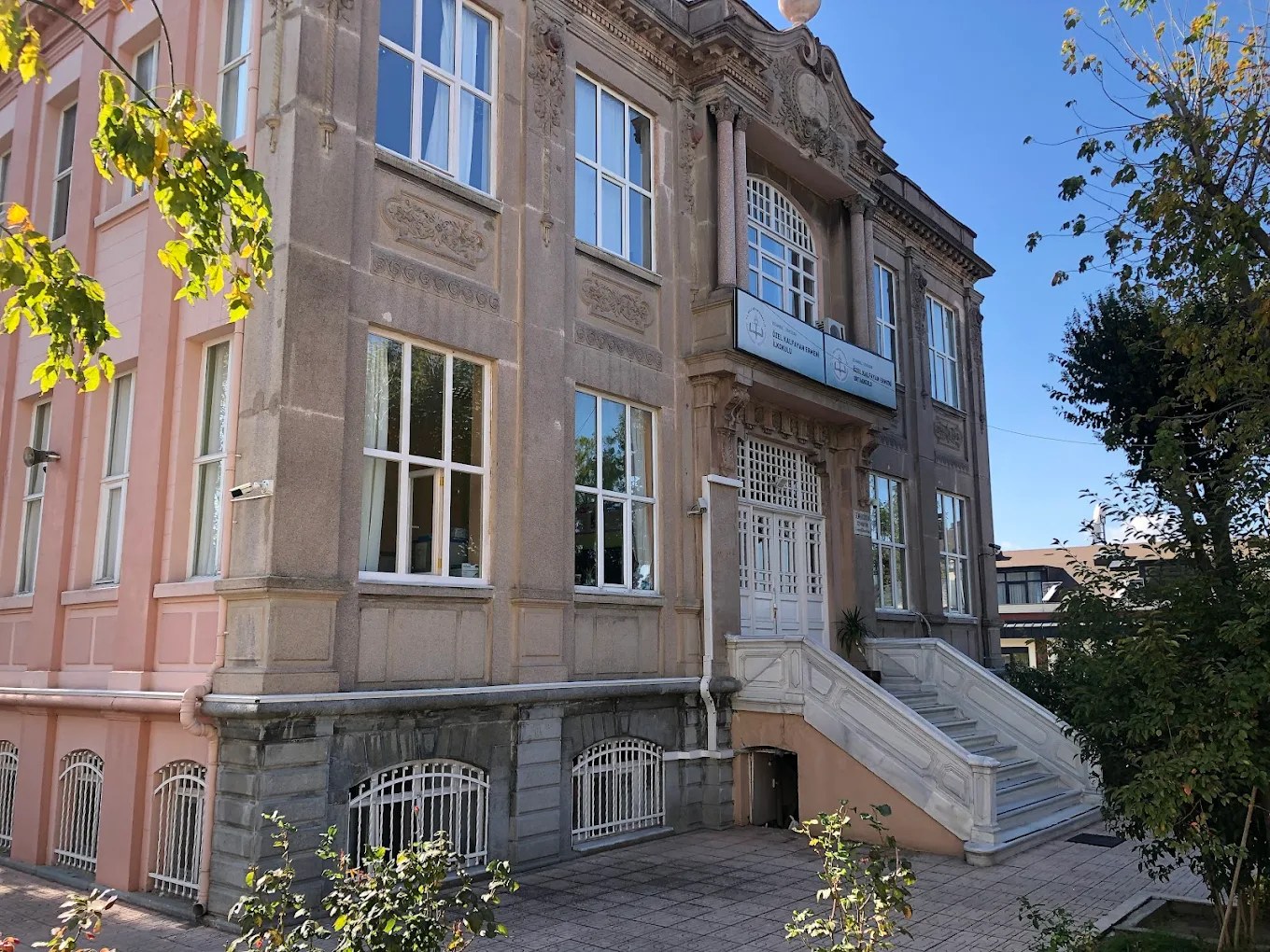
The present masonry school building was constructed in 1911 on the same site with the financial support of the merchant Levon Semerciyan.
The Kalfayan institution was founded in 1866 by Sister Srpouhi Nişan Kalfayan; the institution began its educational activities in 1900, and gained official status under the Ministry of National Education with the licence dated 14 June 1928.
After compulsory education was extended to 8 years in 1997, Kalfayan School merged with Private Semerciyan Cemaran Armenian Primary Education School in the 1999-2000 academic year and began education in the historic building of Semerciyan Cemaran; in 2000-2001, a merger took place with Private Nersesyan Yermonyan Armenian Primary Education School in Üsküdar.
After the transition to the 4+4 system in 2012, the school has continued its education at its present address in accordance with the primary school-secondary school arrangement.
Featured Highlights
The building is also known as “Semerciyan Cemeran Armenian School”; in its present use, it is a historic school building identified with Kalfayan Armenian Schools.
The complex is one of the rare examples of educational heritage that combines the tradition of Cemaran School and the institutional history of Kalfayan in the same building; for this reason, it represents together 19th-century Armenian educational history and early 20th-century school architecture.
The present building is two storeys over a basement and has a rectangular plan; the main entrance is on the south, and there is a second exit opening to the garden on the north.
On the south facade, the monumental entrance reached by 10 steps, the slightly projecting balcony with paired columns above it, the pilaster arrangement, the Ionic capitals, and the decorated cornice line form the building’s distinctive facade character.
In the interior, there is a wide corridor on the central axis entered from the south and a stair hall on the north; the rooms show a symmetrical arrangement placed on both sides of the corridor.
The building is a distinctive 20th-century Armenian school with the water well in its garden.