
Changes After Construction
A summer school was first opened in Kandilli by the Mekhitarists in 1811. As a continuation of this school, the school opened in Beyoğlu in the same year closed in 1816 because of financial difficulties.
Later, the Mekhitarist priests found a suitable building in Beyoğlu, and the school reopened in 1825. The school, built on a plot belonging to the monastery in Beyoğlu, burned down completely in 1839.
After experiencing building problems for a long time, the school moved in 1866 to a building with an extensive estate belonging to the Kalpakçıyan Family in Pangaltı.
The school was moved to the Pangaltı complex in the 1865–1866 period; the complex took permanent shape on the land purchased together with its building.
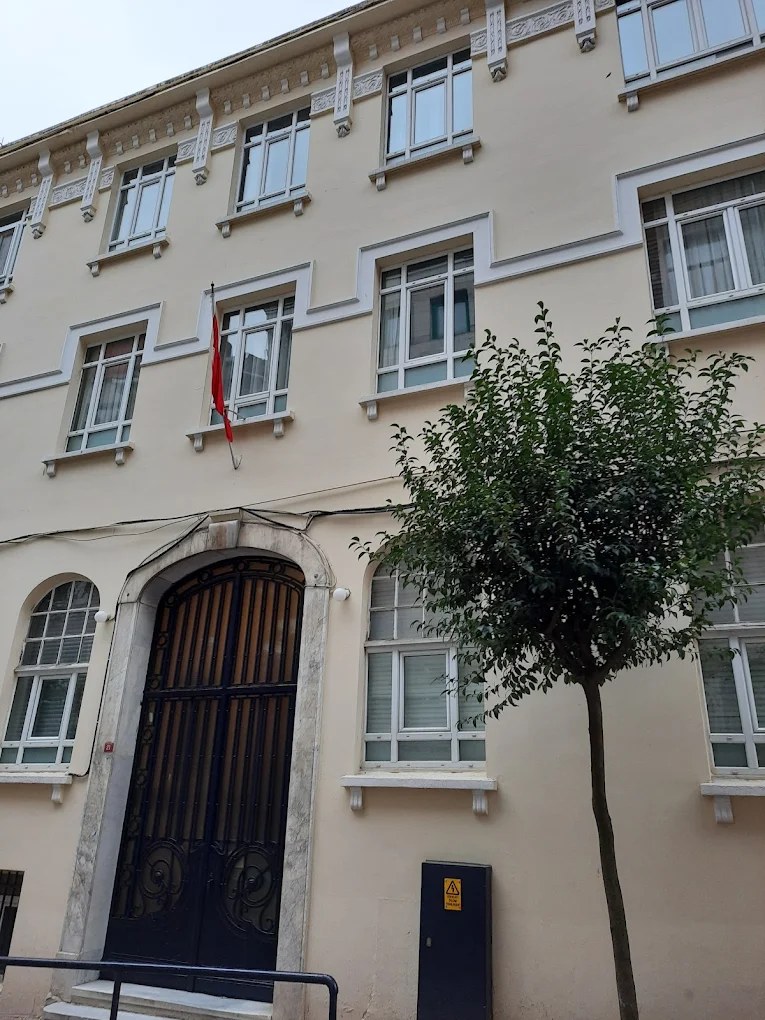
The school building within the complex was renewed by the architect Kegham Kavafyan in accordance with the project dated 1917.
The old school and monastery buildings were rebuilt in 1927 in accordance with the project drawn by Kegham Kavafyan.
Because of increasing need, one more storey was added to the school building in 1936.
The church building in the complex underwent repair in 1974.
Featured Highlights
Because the school was founded by the priests of the Mekhitarist Monastery, it is also known among Armenians as Mıhıteryan High School.
The complex was conceived as a whole consisting of school, church, and administration building components.
The administration structure is a masonry building; there is a connection between the administration structure and the church both through the interior and via the iron gate continuing from the side garden.
The structures in the complex date to the mid-19th century; the 1917 project renewal and the 1927 reconstruction of the school building are among the principal interventions that defined the architectural identity of the complex.
Within the complex, shops were built along the street in 1890; this addition became part of the same urban facade composition together with the school buildings.