Listen-0:00
Changes After Construction
During the First World War, it was used as a building where soldiers were accommodated.
From the 1970s onward, it became a place where the poor and the homeless were sheltered.
It was restored by the General Directorate of Foundations.
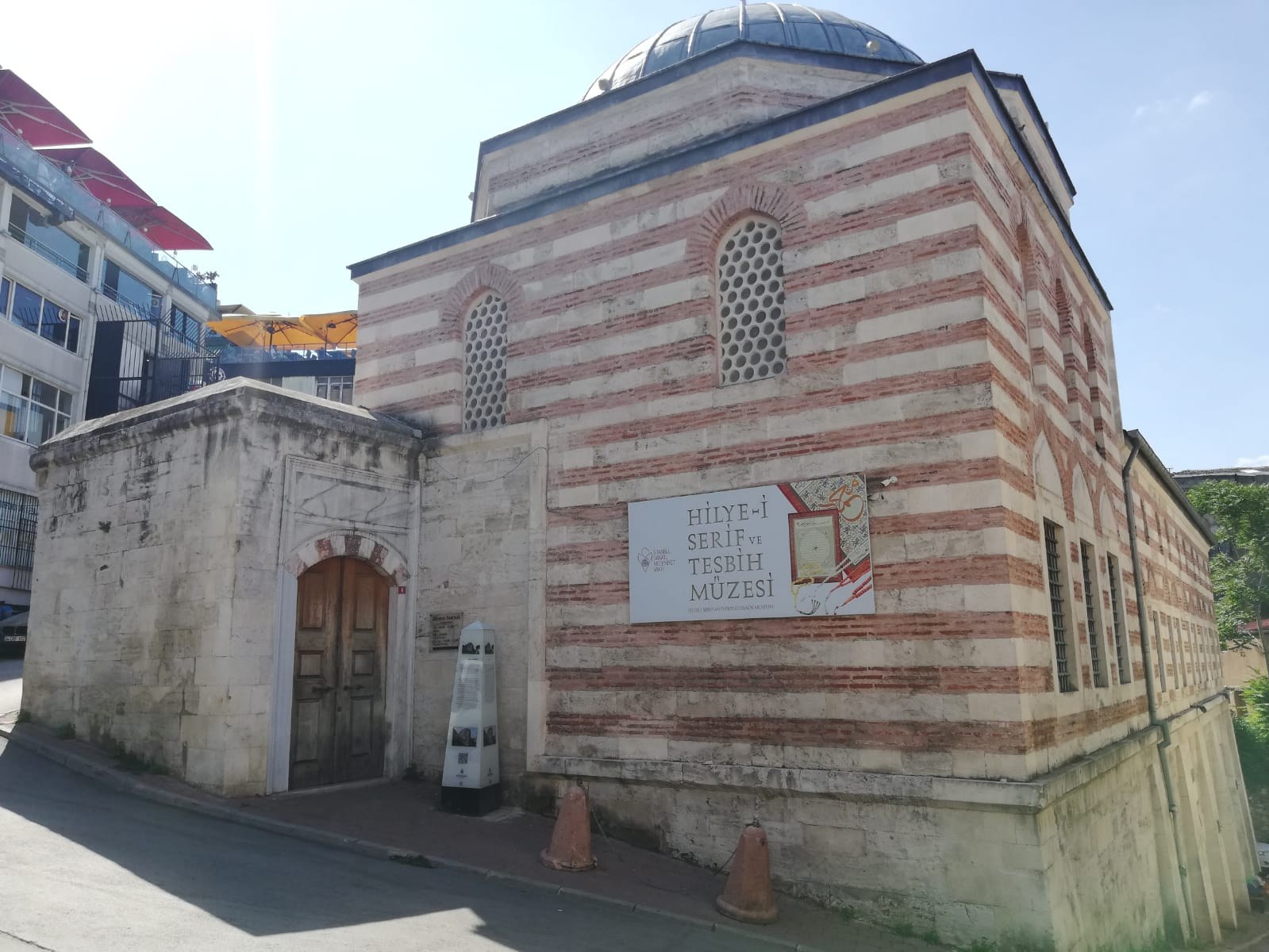
It was opened to service as the Hilye-i Sharif and Tesbih Museum on 2 January 2016.
Featured Highlights
It is also known as the Hoca Hamza Madrasa.
Because of the sloping terrain, it rises over basements/vaulted cellars; its plan was shaped according to the irregular geometry of the plot.
It was designed with cells around the courtyard and a large classroom section.
Today, it is used as a collection-based museum.