
Changes After Construction
The name “dârülkurrâ” does not appear in the waqf deed or in Sinan’s registers; the name “dârülkurrâ” is seen in later sources.
Some researchers describe the structure as the classroom of the Dar al-Hadith Madrasa or as the tomb-keeper’s room; this description is incorrect.
In the accounting registers, the dârülkurrâ does not appear as an independent madrasa; it is treated as a section of the mosque.
Featured Highlights
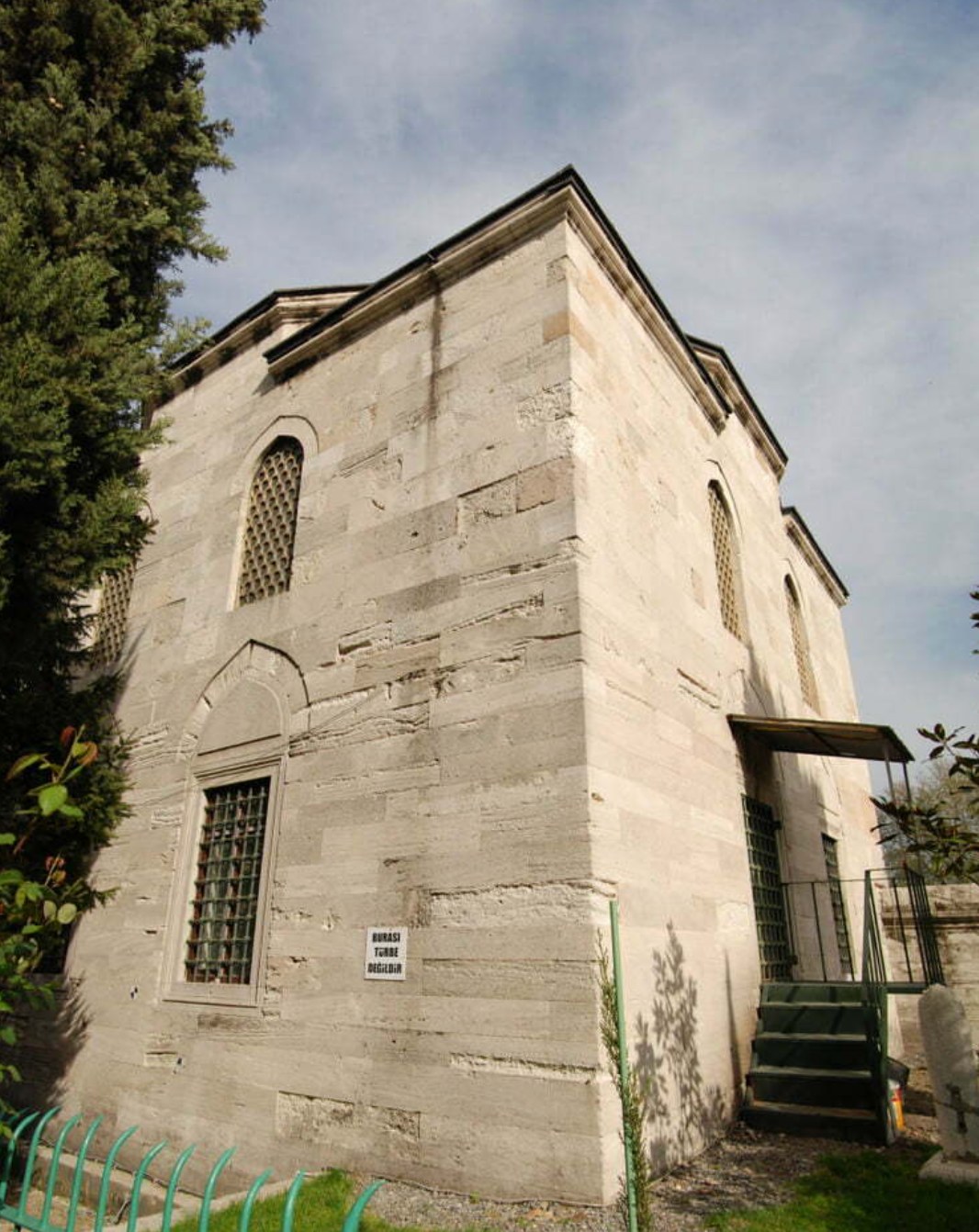
It is located on the mihrab axis in the courtyard of the tombs and graveyard on the qibla side of the Süleymaniye Mosque.
It is a square-planned and domed structure; its door is on the south and outside the courtyard.
It rises on a basement level; its mass projects into the graveyard area.
Its mass projecting toward the courtyard rises over a cistern.
Cut küfeki stone is used in the walls, while white marble is used in the door and window jambs.
It is associated with the unit within the Süleymaniye Mosque where the Qur’an and the science of recitation were taught.