
Person in the Tomb
Sultan V. Mehmet, Sultan Abdülmecid’in oğludur. 1909’da II. Abdülhamid’in tahttan indirilmesiyle padişah olmuş, Meşrutiyet rejimi altında sembolik bir rol üstlenmiştir. Saltanatı, Trablusgarp Savaşı, Balkan Savaşları ve I. Dünya Savaşı gibi çalkantılı dönemlere sahne olmuş, Osmanlı İmparatorluğu’nun toprak kayıplarının hızlandığı bir döneme denk gelmiştir.
Kendi isteğiyle Eyüp’te çocuk sesleri ve su şırıltıları arasında huzurlu bir istirahat yeri olarak düşündüğü türbeye defnedilmiştir.
About the Mausoleum
- Year Built
- Commissioned By
- Architect
- Location
Featured Highlights
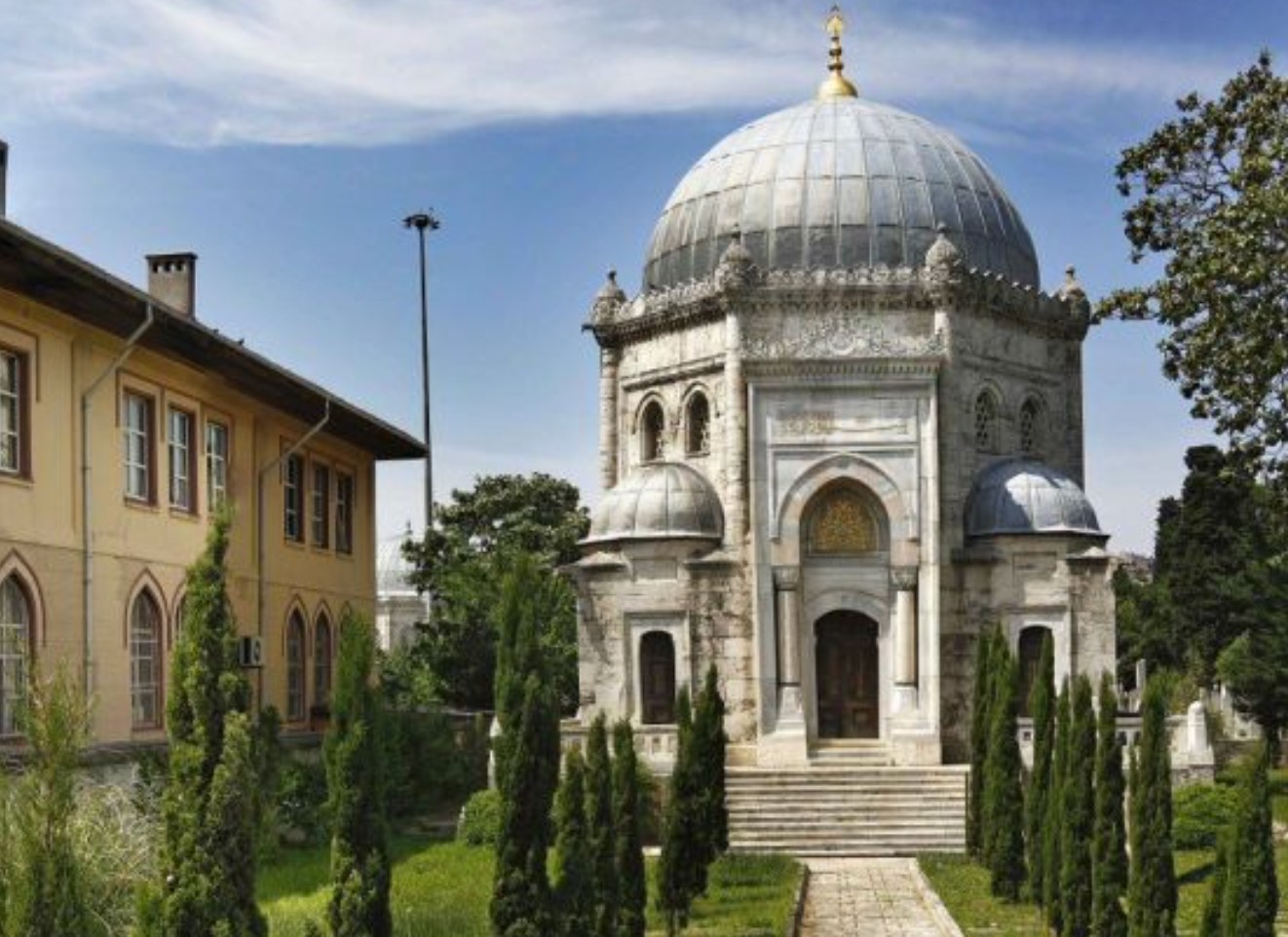
This is the last dynastic tomb built in Istanbul and the only sultan’s tomb constructed outside the city walls.
It has an octagonal plan; due to the triangular cells covered with trompes on either side of the entrance, a distorted hexagon forms at the base.
It is one of the most significant examples of Ottoman neo-classical style in funerary architecture.
Built of limestone, the dome is covered in lead and crowned with a finial.
The facade is highlighted by a monumental portal reached by a flight of ten steps. Above the door is a basmala written in celî sülüs by calligrapher Ömer Vasfi Efendi and a construction inscription dated 1332 (1914). The tympanum features verse 50 from Sura Sad written in mirrored script.
The lower section has large, pointed-arch windows with thick moldings; the upper section features pairs of windows with ornamental lunette panels. Muqarnas cornices, crested friezes, and intricately carved stone capitals showcase expert craftsmanship.
Tile panels extend up to the windows; the patterns replicate the 16th-century classical style. The tiles were likely produced in the Kütahya workshop of Hafız Mehmed Emin Efendi. On the walls, verses from Sura al-Fajr are written in white sülüs on a dark blue background.
Sultan Mehmed Reşad’s sarcophagus, surrounded by a brass grille, is inscribed with the names ‘Yâ Latîf’ and ‘Yâ Hâfız’. Also buried in the tomb are his chief consort Kâmures Kadın (d. 1921) and his son Necmeddin Efendi (d. 1913).