Changes After Construction
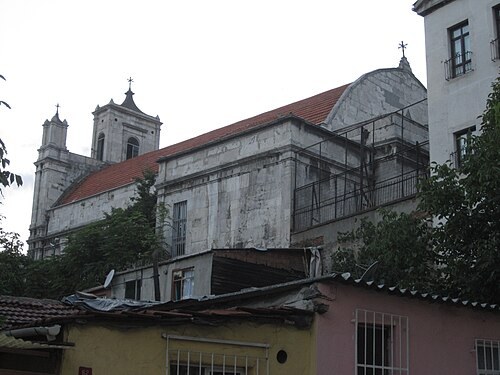
The church was built in 1031 by Emperor Romanos III Argyros under the name Theotokos Peribleptos (Sulu Monastery).
After the Ottoman conquest of Istanbul, it was allocated to the Armenian Patriarchate by Mehmed the Conqueror; it became the first central church of the Patriarchate. Until 1641, it was used as the patriarchal cathedral of the Armenians.
The fire of 1660 heavily damaged the church; the building was rebuilt in 1722 during the patriarchate of Hovhannes Golod.
The building was damaged again in the fire of 1782; afterward, it was repaired in 1804 during the patriarchate of Hovhannes XI.
In 1832, it was repaired again through the works of Architect Hagop Amira Güllabyan and Architect Minas Kalfa.
It is recorded that the church and the adjoining schools burned in the fire of 1866; afterward, a masonry rebuilding process was carried out in the complex in 1885. The architect of this rebuilding process was Bedros Nemtze.
It is stated that the most recent restoration was carried out in 2006 and that the church was reopened for worship by Patriarch Mesrob II.
Featured Highlights
The church belongs to the Armenian Patriarchate of Turkey.
The building is also known as the “Sulu (Watery) Monastery”; this name is associated with the holy spring/water source near the complex.
The building and the adjacent monastery were also referred to in the historical process by the names “Theotokos,” “Aya Maria,” “Aya Panayia,” “Peribleptos,” and “Panayia Peribleptos.”
It is stated that the present building is associated with the site of an earlier Byzantine church and monastery (Saint Mary Peribleptos).
It is recorded that the Sahakyan Nunyan Armenian School is located within the complex.
The church has a high bell tower.
It is stated that the “Surp Kevork Armenian Church, School, and Cemetery Foundation” was established by a decree dated 1832.