Changes After Construction
It underwent extensive restoration between 2018 and 2019.
It was reopened for worship on February 17, 2020.
Featured Highlights
In the 17th century, castrated African men in the Ottoman palace were called “Tavaşi”. These men, who were brought to the palace at a young age, were usually assigned to the Harem after serving in various positions. Those who were extremely successful in their service in the Harem could rise to the highest rank and become the Darüssaade Ağası (Agha of the House of Felicity)
Its founder, Tavaşi Suleyman Agha, is buried here, but his grave has not survived to the present day.
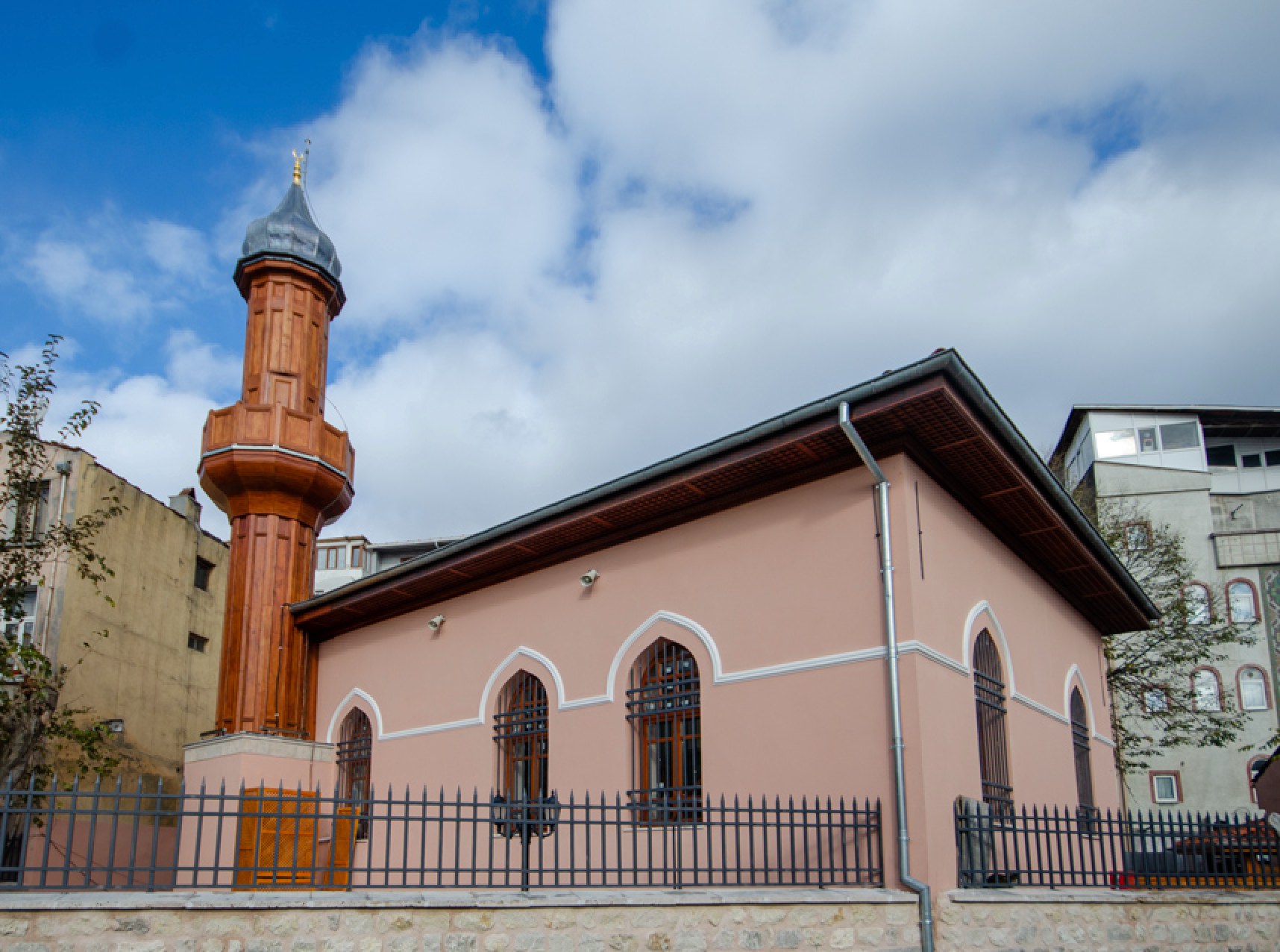
It has a basement, walls are made of stone, and its roof and single-balcony minaret are made of wood.
The roof is covered with tiles.
Its minbar and mihrab are made of wood.
The interior wall skirts up to the window level are covered with wood, as is the ceiling.
There are two long windows on each wall of the mosque.
The cone of the generally grooved wooden minaret is onion-shaped, and its balcony has an iron railing.
The balcony of the minaret resembles six bowls.
It has a well that is still used today.