
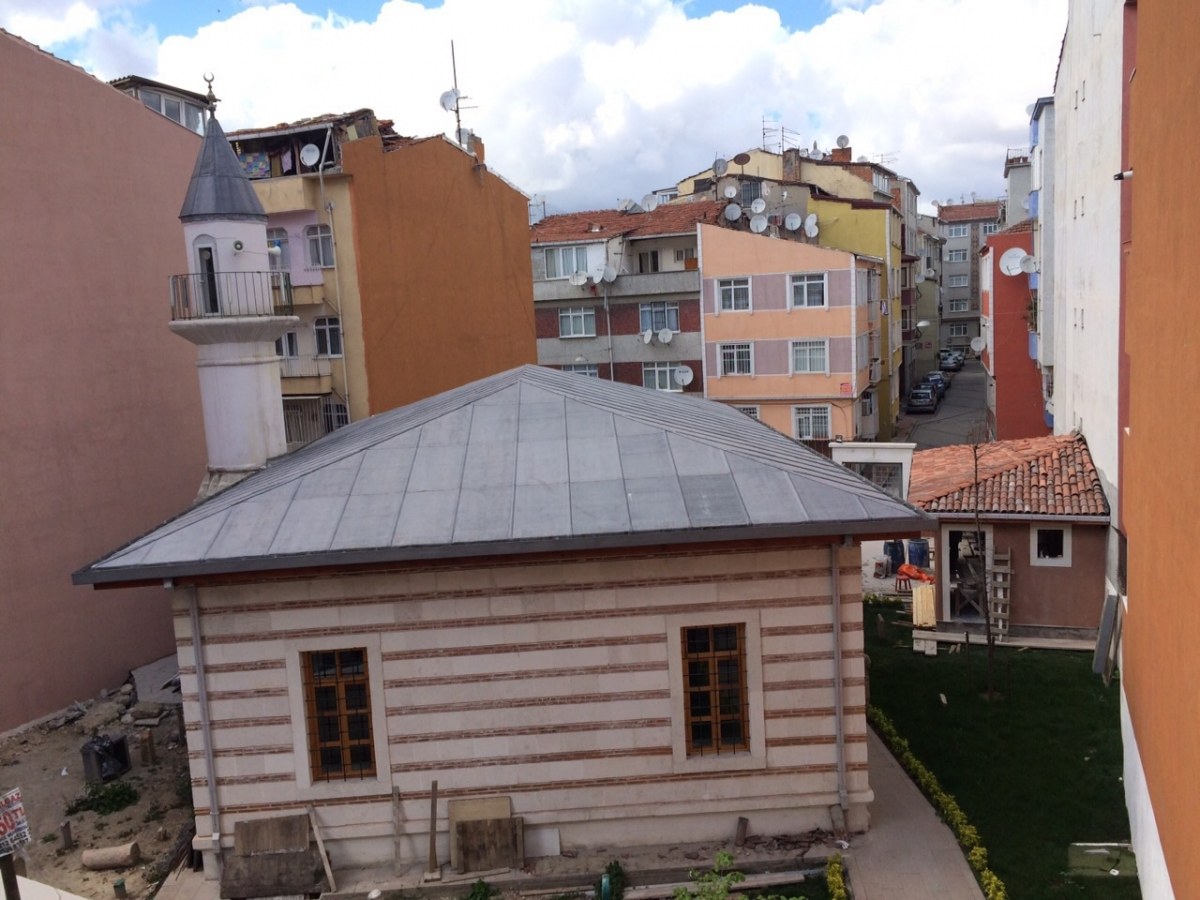
Changes After Construction
The building was constructed as a masjid in the second half of the 15th century.
A minbar was installed in the 18th century by Seyyid Halil Efendi; with this intervention, the building acquired the function of a mosque.
The building was damaged in the fires that occurred in Fatih; the above-ground remains disappeared, and for a long time only part of the core of the minaret remained standing.
A reconstruction project was prepared and the building was revived; after the revival, the mosque was reopened for worship in 2015.
During the revival process, the graveyard on the south and southwest sides was arranged; the grave in front of the mihrab was uncovered from beneath the soil during the excavation.
Featured Highlights
The building is also known as Uzun Yusuf Mosque.
Its wall masonry is in a pattern of two courses of brick and one course of stone; the same masonry logic is also seen in the base of the minaret.
The upper covering is a wooden hipped roof covered with tiles.
In the graveyard are the graves of Uzun Yusuf and his brother; this graveyard is part of the structural whole of the masjid.
In the Ottoman period, the area where the building stood was known as “Yayla”; the building was also recorded under the description “Uzun Yusuf Masjid near Yayla.”