Changes After Construction
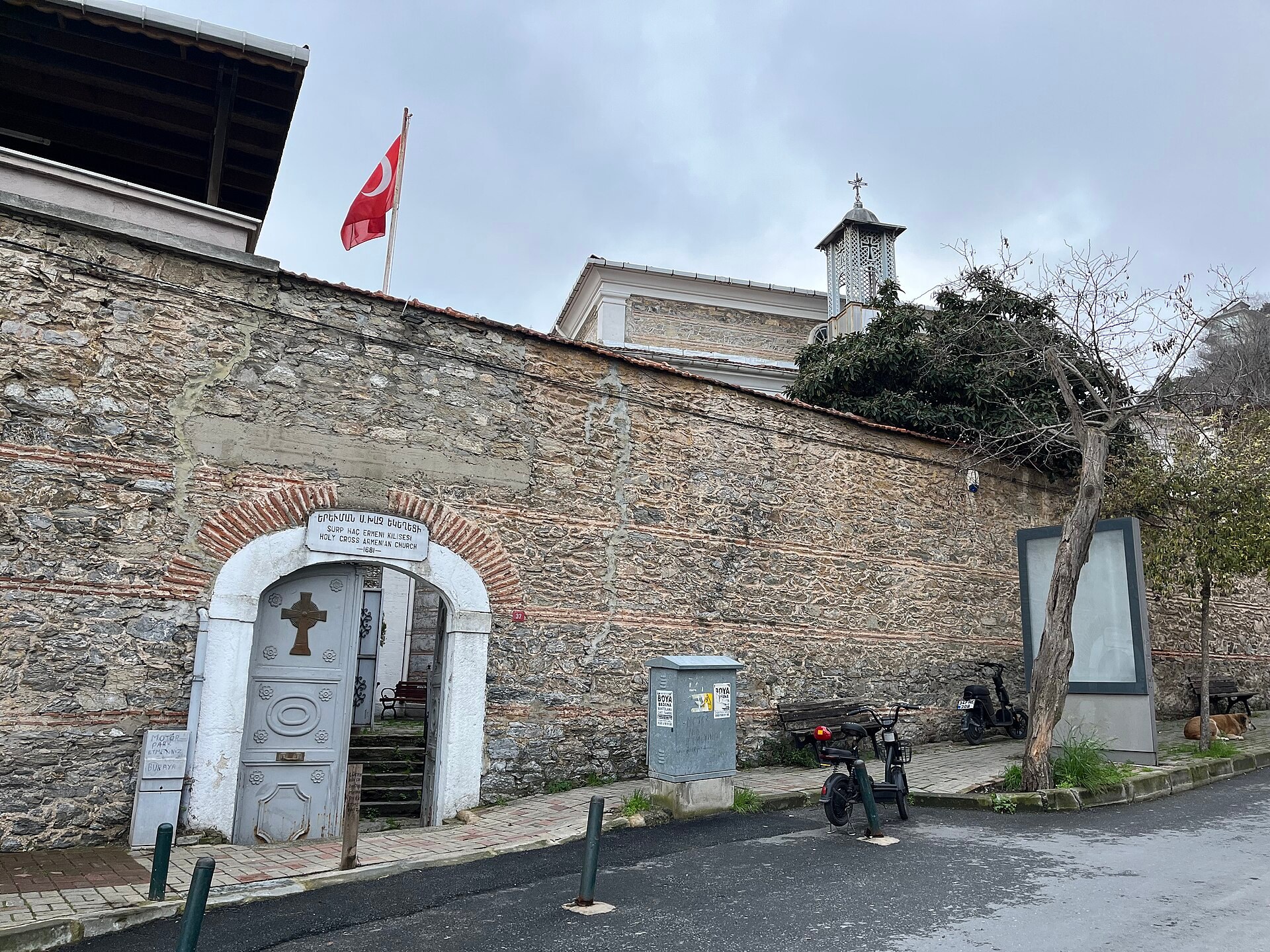
The construction date of the church is given as 1681 on the marble plaque at the entrance; however, official sources state that the construction date was 1798 and that it was consecrated and opened for worship in the same year by Bishop Hovhannes.
Çoban Amira had the church built from the ground up during the patriarchate of Patriarch Zakarya II of Kağızman; the construction costs were covered from Patriarch Zakarya II’s own savings.
The church underwent a major restoration in 1834; Garabed Amira Balyan assumed the administration of the restoration process.
In 1835, a three-storey wooden Tarkmançats school was built adjacent to the church.
In 1858, a bell tower was built on the eastern side of the church.
The building suffered heavy damage in the Kuruçeşme fire of 1919.
The church underwent repairs in 1975 and 1988; after these repairs, it was reopened for worship.
The church’s most recent restoration was carried out in 2007; after the restoration, it was reopened for worship.
Featured Highlights
The church belongs to the Armenian Patriarchate of Turkey.
The building was known as “Surp Nışan” during its initial construction period.
In 1780, a fountain was commissioned near the main entrance gate.
In 1798, it was consecrated and opened for worship by Bishop Hovhannes of Istanbul.
In 1799, Patriarch Zakarya, and in 1874, Bishop Nigoğayos Ağasyan, were buried beside the south wall of the church.