
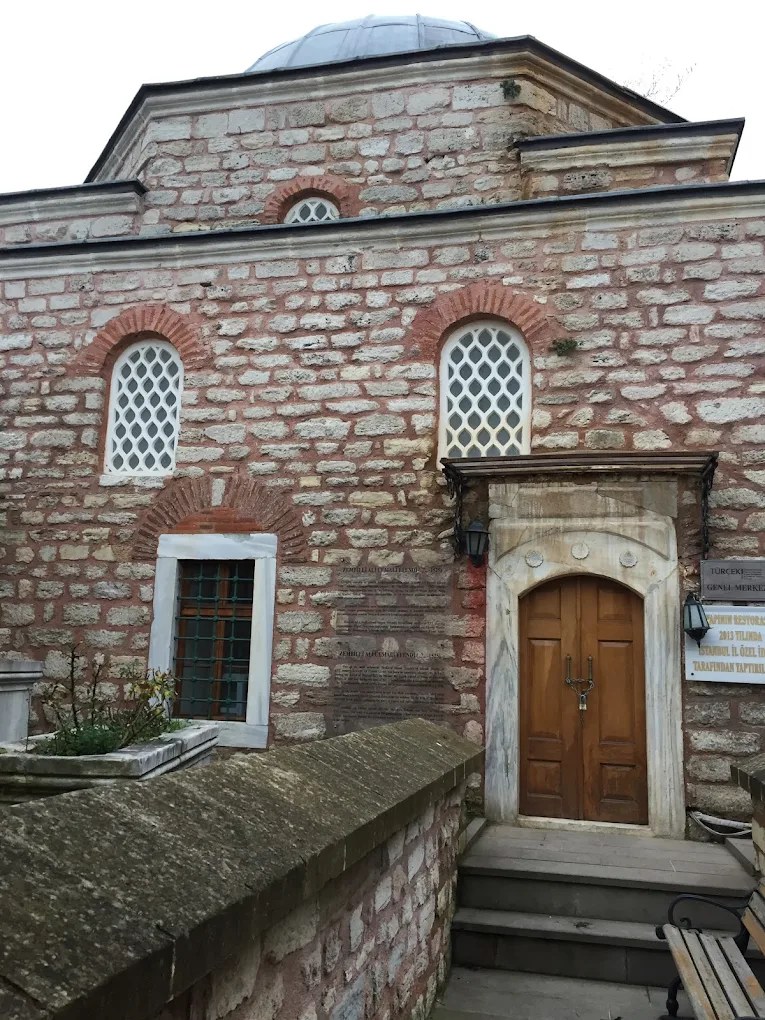
Changes After Construction
The structure, whose architect is unknown, was built next to the Sheikh al-Islam Mansion, which no longer exists.
It was used for educational purposes until the early years of the Republic.
After the closure of sıbyan schools with the Law on the Unification of Education in 1924, it lost its original function and fell into ruin.
In 1961, it was revived in accordance with its original form.
Finally, it was restored by the Istanbul Provincial Special Administration in 2013 and took its present form.
Featured Highlights
It is a classic example of Ottoman sıbyan schools (primary schools), which traditionally provided children with basic religious education and literacy instruction.
The tomb of its patron, Zembilli Ali Efendi, is located adjacent to the school.
Ali Efendi, who was famous for lowering a basket (zembil) from his window to collect people’s questions and provide written fatwas, served uninterruptedly for 24 years in the highest-ranking mufti office during the reigns of Sultan Bayezid II, Sultan Selim I, and Suleiman the Magnificent.
The office of Sheikh al-Islam gained official status in the mid-16th century through figures such as Zembilli Ali Efendi, İbn-i Kemal Paşazade, and Ebussuud Efendi.